Cāturmāsya 2026: Four Sacred Months of Spiritual Growth
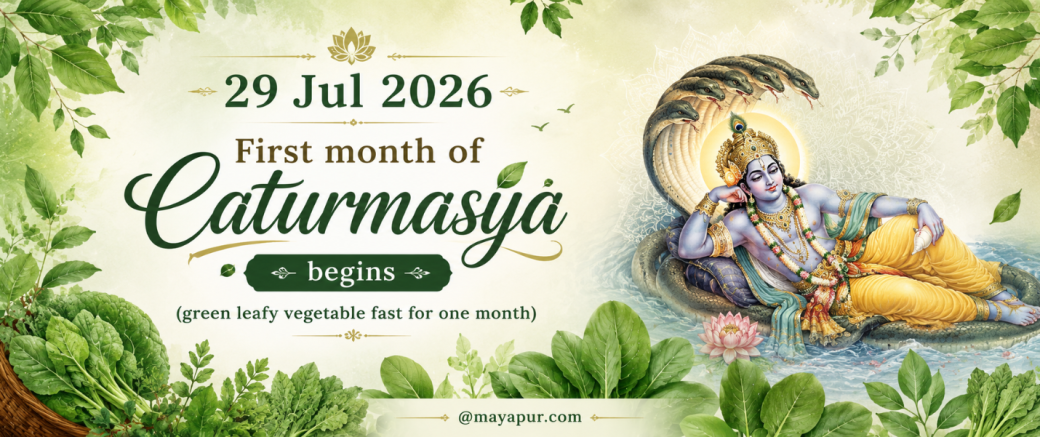
29 July – 24 November 2026
Cāturmāsya, meaning "four months," is one of the most sacred periods in the Vaiṣṇava calendar. It is a time dedicated to increased remembrance of Lord Śrī Kṛṣṇa through simplicity, austerity, and deeper devotional practice. Rather than being merely a period of giving up certain foods, Cāturmāsya is an opportunity to strengthen one's relationship with the Lord by increasing sādhana, service, and spiritual discipline.
Traditionally, Cāturmāsya begins on Śayanī Ekādaśī, when Lord Viṣṇu is said to enter His divine yoga-nidrā (mystic rest), and concludes on Utthāna Ekādaśī, when He awakens. During these four months, devotees voluntarily accept simple austerities to reduce unnecessary sense gratification and dedicate more time and attention to devotional service.
Why Observe Cāturmāsya?
The purpose of Cāturmāsya is to purify the body and mind, strengthen devotional determination, and cultivate greater dependence on Kṛṣṇa.
Śrīla Prabhupāda explains:
"Overindulgence in food will cause a man to sleep more than required. This human form of life is meant for austerity, and austerity means controlling sex, food intake, etc. In this way time can be saved for spiritual activity, and one can purify himself both externally and internally. Thus both body and mind can be cleansed."
— Śrīmad-Bhāgavatam 4.28.35, Purport
Austerity in Kṛṣṇa consciousness is never an end in itself. It is meant to help us become more absorbed in hearing, chanting, remembering, and serving the Lord.
Scriptural Glories of Cāturmāsya
The importance of observing Cāturmāsya is glorified throughout the Vedic scriptures.
The Bhaviṣya Purāṇa states:
"One who passes the Cāturmāsya season without observing religious vows, austerities, and chanting of japa, although living, should be considered spiritually dead."
The Padma Purāṇa explains that one who neglects vows during Cāturmāsya loses the benefit of many pious activities and finds it more difficult to please the Supreme Personality of Godhead.
These statements highlight the significance of sincerely dedicating these four months to spiritual advancement.
Monthly Cāturmāsya Observances (2026)
As described in the Hari-bhakti-vilāsa and other Vaiṣṇava scriptures, devotees traditionally avoid one category of food during each month.
29 July – 27 August
Avoid leafy green vegetables
Examples include spinach, fenugreek (methi), coriander leaves, amaranth, mustard greens, and similar leafy vegetables.
28 August – 25 September
Avoid yoghurt (curd)
26 September – 25 October
Avoid milk
26 October – 24 November
Avoid urad dal (black gram)
These dietary observances are voluntary offerings of devotion meant to cultivate self-discipline and remembrance of Kṛṣṇa.
Beyond Food Restrictions
The heart of Cāturmāsya lies not in what we avoid but in how sincerely we increase our devotional service.
Devotees are encouraged to:
Increase chanting of the Hare Kṛṣṇa mahā-mantra.
Read Bhagavad-gītā, Śrīmad-Bhāgavatam, Śrī Caitanya-caritāmṛta, or other Vaiṣṇava literature daily.
Rise early and strengthen their morning sādhana.
Worship and circumambulate Śrīmatī Tulasī Devī.
Observe Ekādaśī carefully.
Perform more seva for the Lord and His devotees.
Practise humility and proper Vaiṣṇava etiquette.
Avoid gossip, criticism, and unnecessary material distractions.
Offer simple, sattvic preparations with devotion.
Reduce unnecessary sense gratification and live more simply.
Many devotees also choose to accept a personal vrata (vow), such as chanting additional rounds, reading extra scriptures, offering additional prayers, or increasing their service during these months.
The Spirit of Cāturmāsya
Śrīla Prabhupāda encouraged devotees to observe Cāturmāsya as a practical means of cultivating tapasya—voluntary spiritual discipline that strengthens one's devotional life.
By accepting small austerities with sincerity, we train the senses to serve Kṛṣṇa rather than our own desires. Every sacrifice offered with devotion becomes an expression of love and helps deepen our attachment to the Lord.
Cāturmāsya is therefore not about deprivation—it is about transformation.
Who Can Observe Cāturmāsya?
Anyone can observe Cāturmāsya according to their capacity. Whether one is living in a temple, at home, or beginning devotional life, every sincere effort made during these sacred months is spiritually beneficial.
Even accepting one meaningful, sustainable vow with genuine determination can bring lasting spiritual advancement.
May this Cāturmāsya inspire all of us to deepen our remembrance of Śrī Kṛṣṇa, strengthen our devotional practices, and grow in humility, service, and love for the Supreme Lord.
Posted 2 months ago