Sri Krishna Rasayatra - First Day of Kartik!
bhagavan api ta ratrih
saradotphulla-mallikah
viksy- a rantum manas cakre
yoga-mayam upasritah
Sri Kṛṣṇa is the Supreme Personality of Godhead, full in all opulences, yet upon seeing those autumn nights scented with blossoming jasmine flowers, He turned His mind toward loving affairs. To fulfill His purposes He employed His internal potency. — Śrīmad-Bhāgavatam 10.29.1
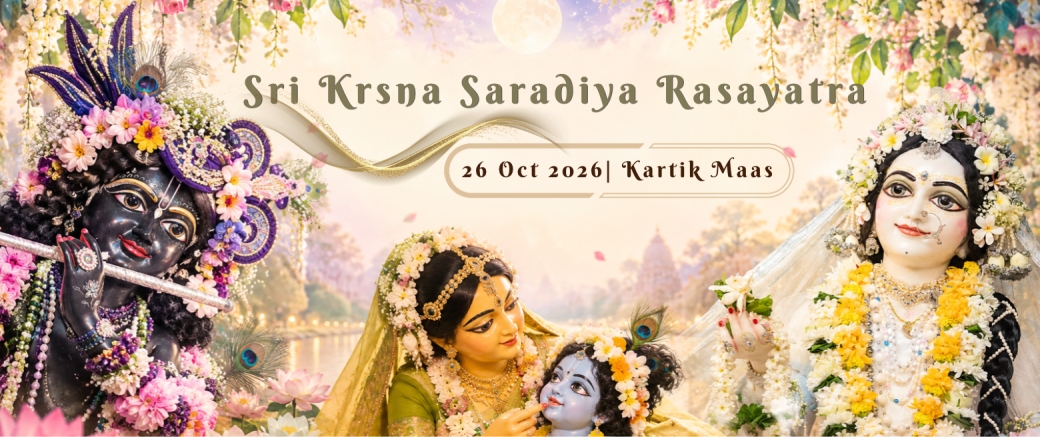
On the full moon night of Kārtika, the forests of Vṛndāvana are remembered as the setting for one of the most enchanting pastimes of Lord Śrī Kṛṣṇa: the Rāsa-līlā. Beneath the autumn moon, amid the fragrance of blossoming jasmine and the gentle sounds of the forest, Śyāmasundara plays His flute, awakening the hearts of His beloved gopīs and inviting them into His transcendental dance. This pastime reveals the extraordinary sweetness of the Lord and the loving exchanges He shares with His devotees.
In Śrīdhāma Māyāpur, which is deeply connected with the spiritual atmosphere of Vṛndāvana, Śrī Kṛṣṇa Rāsayātrā is celebrated with beautiful offerings and devotional festivities. On this auspicious occasion, the dancing Deities of Śrīmatī Rādhārāṇī and the Aṣṭa-sakhīs, each accompanied by their own Śrī Mādhava, are beautifully arranged on the platform below the altar of Śrī Śrī Rādhā-Mādhava. Devotees prepare sweet rice and a variety of milk sweets as offerings for Their Lordships, seeking to please Them on this sacred evening.
Rāsa Pūrṇimā also marks the beginning of Śrī Śrī Rādhā-Mādhava’s weekly elephant processions in Māyāpur. On this special evening, Their Lordships come out of the temple and travel around the Māyāpur campus on the back of an elephant, accompanied by Śrī Śrī Gaura-Nitāi from Śrīla Prabhupāda’s Bhajana-kuṭīra. A harināma party leads the procession with ecstatic kīrtana, filling the atmosphere with the chanting of the holy names.
As Their Lordships proceed through the campus, the sounds of conch shells and vibrant drums announce Their arrival. The boys of the Māyāpur Gurukula chant auspicious mantras, while the pathways glow with the light of lamps and the campus shines with festive illumination. Devotees create intricate raṅgolīs along the procession route, using colourful powders, flowers, and other natural materials to transform the surroundings into offerings of beauty and devotion. The community also prepares a variety of dishes for the pleasure of the Lord.
The evening continues with devotees offering lamps to Their Lordships, followed by the singing of Dāmodarāṣṭakam and the Gopī-gīta. Through these offerings, prayers, and the collective chanting of the holy names, the devotees express their desire to serve and please Śrī Śrī Rādhā-Mādhava.
The full moon of Dāmodara month is also known as the second full moon of the autumn season, when Rāsa-līlā is celebrated again. This second Rāsa-yātrā is observed especially in Bengal, while the first is celebrated more prominently in Śrīdhāma Vṛndāvana. In Māyāpur, the occasion brings together worship, music, dance, kīrtana, lamps, and beautiful offerings, allowing devotees to remember the transcendental pastimes of the Divine Couple.
As Śrīla Prabhupāda explains:
“By gradual development of transcendental knowledge, one can rise to the stage of the transcendental arts of music and dance displayed by the Lord in His rasa-lila. But without having the Vedic knowledge one can hardly understand the transcendental nature of the Lord's rasa dance and music.” — Śrīla Prabhupāda, Śrīmad-Bhāgavatam 2.2.4
The Rāsa-līlā is not an ordinary dance, but a transcendental pastime of the Supreme Lord, whose activities are understood through spiritual knowledge and devotion. By the mercy of Śrī Caitanya Mahāprabhu and Śrīla Prabhupāda, devotees are given the opportunity to hear about Kṛṣṇa’s pastimes in the proper devotional understanding and gradually appreciate their sweetness.
Ultimately, Śrī Kṛṣṇa Rāsayātrā is an opportunity to turn our hearts towards the pleasure of the Lord. Through the procession, kīrtana, lamp offerings, and loving service, the devotees seek not their own enjoyment, but the pleasure of Śrī Śrī Rādhā-Mādhava. This is the essence of the festival: to remember the Lord’s transcendental pastimes and engage whatever we have in His service.
Posted 1 day ago